

In the field of industrial wear resistance, overlay wear-resistant steel plates and composite wear-resistant steel plates are two widely used materials. Although both have "wear resistance" as their core characteristic, there are significant differences in their manufacturing principles, performance advantages, and applicable scenarios. This article will conduct a comparative analysis from six key dimensions, providing clear
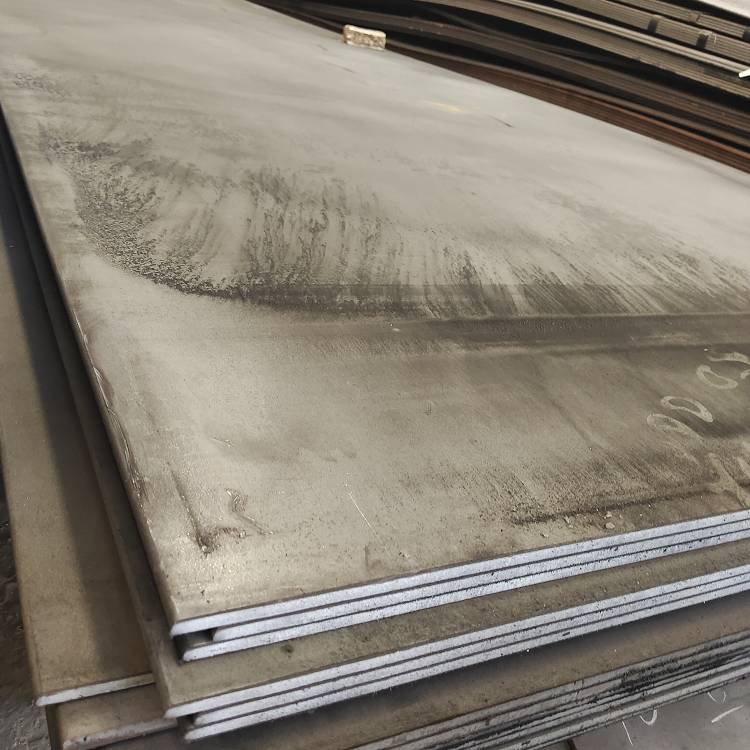
references for material selection in fields such as equipment manufacturing, mining, and building materials processing.
Production process: the essential difference from "deposition" to "composite"
The core difference between the two types of steel plates lies in their manufacturing processes, which directly determine their structural and performance foundations
(1) Welding wear-resistant steel plate: "layer by layer deposition" to form a wear-resistant layer
Welding wear-resistant steel plates are made of ordinary low-carbon steel or low-alloy steel as the substrate (ensuring toughness and weldability), and high hardness wear-resistant alloy materials (such as high chromium cast iron and tungsten carbide alloy) are deposited layer by layer on the surface of the substrate through the "welding process".
Process characteristics: Adopting submerged arc welding, open arc welding and other methods, the wear-resistant layer is metallurgically bonded with the substrate (atomic level fusion), with no obvious interface; The thickness of the wear-resistant layer can be adjusted according to the needs (usually 3-20mm), and in some scenarios, multi-layer welding can be achieved to improve wear resistance.
Core requirement: Strictly control the welding temperature and cooling rate to avoid deformation of the substrate due to high temperature, while ensuring that the wear-resistant layer is free of defects such as cracks and pores.
(2) Composite wear-resistant steel plate: "high-pressure composite" achieves interlayer bonding
Composite wear-resistant steel plate is formed by combining two or more layers of metal, namely the wear-resistant layer (working surface) and the substrate (base layer), through a "composite process", commonly known as "bimetallic composite".
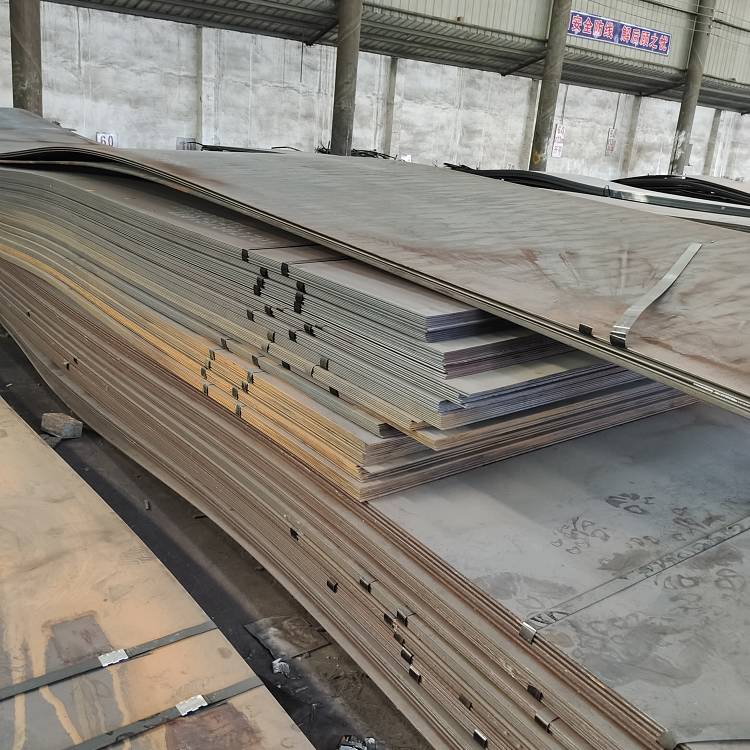
Process characteristics: The mainstream process is "explosive composite" or "hot rolling composite" - explosive composite utilizes the high pressure generated by explosive detonation to instantly bond the wear-resistant layer (such as high hardness alloy steel plate, ceramic particle plate) with the substrate (low carbon steel/low alloy steel); Hot rolled composites achieve interlayer metallurgical bonding through high-temperature rolling pressure. Both are mechanical and metallurgical composites, with clear interlayer interfaces (but high bonding strength).
Core requirements: It is necessary to ensure the adhesion between the wear-resistant layer and the substrate, avoid interlayer peeling, and perform leveling treatment after lamination to control the flatness of the board.


