

Introduction
Steel pipes are essential in various industries, including oil & gas, construction, and machinery. Two primary types dominate the market: seamless steel pipes and welded steel pipes. Understanding their differences helps businesses choose the right product for their needs.
Baogang Ganglian (Tianjin) Steel Co., Ltd. specializes in exporting high-quality steel products, including I-beams, angle steel, and channel steel, catering to global industrial demands.
What is a Seamless Steel Pipe?
Seamless steel pipes are manufactured by piercing a solid billet to form a hollow tube without any welding seams. This process ensures uniform strength and durability, making them ideal for high-pressure applications.
Manufacturing Process
- Billet Heating: A solid steel round billet is heated to extreme temperatures.
- Piercing & Rolling: A piercing rod creates a hollow shell, which is then rolled into a pipe.
- Sizing & Finishing: The pipe is stretched, cooled, and cut to required dimensions.
Key Advantages
✔ Higher Strength & Pressure Resistance – No welded joints mean fewer weak points. ✔ Better Corrosion Resistance – Uniform structure reduces vulnerability to rust. ✔ Smooth Interior Surface – Improves fluid flow efficiency. ✔ Wide Temperature Tolerance – Suitable for extreme heat/cold conditions.
Seamless vs. Welded Steel Pipes: Key Differences
| Feature | Seamless Steel Pipe | Welded Steel Pipe |
|---|---|---|
| Manufacturing Method | Extruded from solid billet | Formed by rolling and welding steel strips |
| Strength | Higher pressure resistance | Weaker at weld seams |
| Surface Finish | Smooth, uniform | Possible weld marks |
| Cost | More expensive due to complex process | Cheaper and faster to produce |
| Applications | Oil & gas, high-pressure systems | Water supply, structural uses |
Performance Characteristics
1. Mechanical Properties
Seamless pipes exhibit superior:
- Tensile Strength (withstands higher stress)
- Impact Resistance (better for dynamic loads)
- Fatigue Resistance (longer lifespan under cyclic stress)
2. Corrosion Resistance
Seamless pipes perform better in harsh environments (e.g., chemical plants, offshore rigs) due to their homogeneous structure.
3. Pressure & Temperature Handling
- Seamless pipes handle ≥10,000 PSI, ideal for oil pipelines.
- Welded pipes typically max out at 2,000–3,000 PSI.
Storage & Handling Conditions
Proper storage ensures longevity and prevents damage:
✔ Ideal Storage Practices
- Keep indoors or under waterproof covers to prevent rust.
- Avoid direct ground contact – use wooden pallets.
- Stack horizontally with spacers to prevent deformation.
✖ Common Storage Mistakes
- Exposure to saltwater/moisture → Accelerated corrosion.
- Improper stacking → Pipe bending or surface scratches.
Troubleshooting Common Pipe Failures
| Issue | Possible Cause | Solution |
|---|---|---|
| Cracks/Bursts | Overpressure, material defects | Use higher-grade steel, pressure-test before use |
| Corrosion | Poor coating, humid storage | Apply anti-rust treatments, improve storage conditions |
| Weld Failures (Welded Pipes Only) | Poor welding technique | Inspect welds via ultrasonic testing (UT) |
Performance Testing Methods
To ensure quality, pipes undergo rigorous testing:
Seamless Steel Pipe vs. Welded Steel Pipe: Key Differences, Performance, and Applications
Introduction
Steel pipes are essential in various industries, including oil & gas, construction, and machinery. Two primary types dominate the market: seamless steel pipes and welded steel pipes. Understanding their differences helps businesses choose the right product for their needs.
Baogang Ganglian (Tianjin) Steel Co., Ltd. specializes in exporting high-quality steel products, including I-beams, angle steel, and channel steel, catering to global industrial demands.
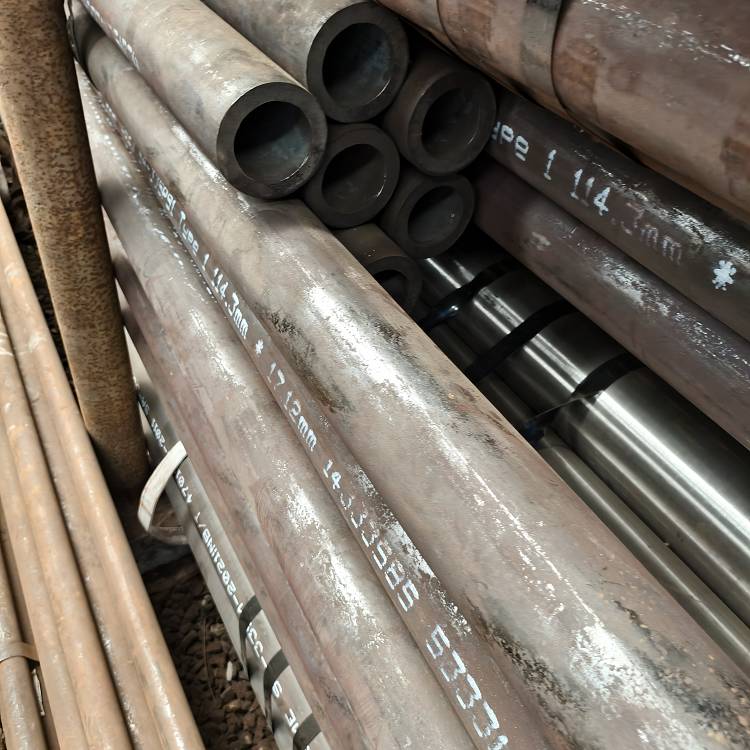
What is a Seamless Steel Pipe?
Seamless steel pipes are manufactured by piercing a solid billet to form a hollow tube without any welding seams. This process ensures uniform strength and durability, making them ideal for high-pressure applications.
Manufacturing Process
- Billet Heating: A solid steel round billet is heated to extreme temperatures.
- Piercing & Rolling: A piercing rod creates a hollow shell, which is then rolled into a pipe.
- Sizing & Finishing: The pipe is stretched, cooled, and cut to required dimensions.
Key Advantages
✔ Higher Strength & Pressure Resistance – No welded joints mean fewer weak points. ✔ Better Corrosion Resistance – Uniform structure reduces vulnerability to rust. ✔ Smooth Interior Surface – Improves fluid flow efficiency. ✔ Wide Temperature Tolerance – Suitable for extreme heat/cold conditions.
Seamless vs. Welded Steel Pipes: Key Differences
| Feature | Seamless Steel Pipe | Welded Steel Pipe |
|---|---|---|
| Manufacturing Method | Extruded from solid billet | Formed by rolling and welding steel strips |
| Strength | Higher pressure resistance | Weaker at weld seams |
| Surface Finish | Smooth, uniform | Possible weld marks |
| Cost | More expensive due to complex process | Cheaper and faster to produce |
| Applications | Oil & gas, high-pressure systems | Water supply, structural uses |
Performance Characteristics
1. Mechanical Properties
Seamless pipes exhibit superior:
- Tensile Strength (withstands higher stress)
- Impact Resistance (better for dynamic loads)
- Fatigue Resistance (longer lifespan under cyclic stress)
2. Corrosion Resistance
Seamless pipes perform better in harsh environments (e.g., chemical plants, offshore rigs) due to their homogeneous structure.
3. Pressure & Temperature Handling
- Seamless pipes handle ≥10,000 PSI, ideal for oil pipelines.
- Welded pipes typically max out at 2,000–3,000 PSI.
Storage & Handling Conditions
Proper storage ensures longevity and prevents damage:
✔ Ideal Storage Practices
- Keep indoors or under waterproof covers to prevent rust.
- Avoid direct ground contact – use wooden pallets.
- Stack horizontally with spacers to prevent deformation.
✖ Common Storage Mistakes
- Exposure to saltwater/moisture → Accelerated corrosion.
- Improper stacking → Pipe bending or surface scratches.
Troubleshooting Common Pipe Failures
| Issue | Possible Cause | Solution |
|---|---|---|
| Cracks/Bursts | Overpressure, material defects | Use higher-grade steel, pressure-test before use |
| Corrosion | Poor coating, humid storage | Apply anti-rust treatments, improve storage conditions |
| Weld Failures (Welded Pipes Only) | Poor welding technique | Inspect welds via ultrasonic testing (UT) |
Performance Testing Methods
To ensure quality, pipes undergo rigorous testing:
1. Hydrostatic Test
- Fills pipe with water at 1.5x working pressure to check leaks.
2. Ultrasonic Testing (UT)
- Detects internal flaws using high-frequency sound waves.
3. Eddy Current Testing
- Identifies surface cracks in seamless pipes.
4. Tensile & Hardness Tests
- Measures strength and ductility.
Applications of Seamless & Welded Pipes
Seamless Pipe Uses
- Oil & Gas Drilling (high-pressure pipelines)
- Power Plants (boiler tubes, steam lines)
- Aerospace & Automotive (hydraulic systems)
Welded Pipe Uses
- Water Supply Systems
- Construction Scaffolding
- HVAC Ductwork
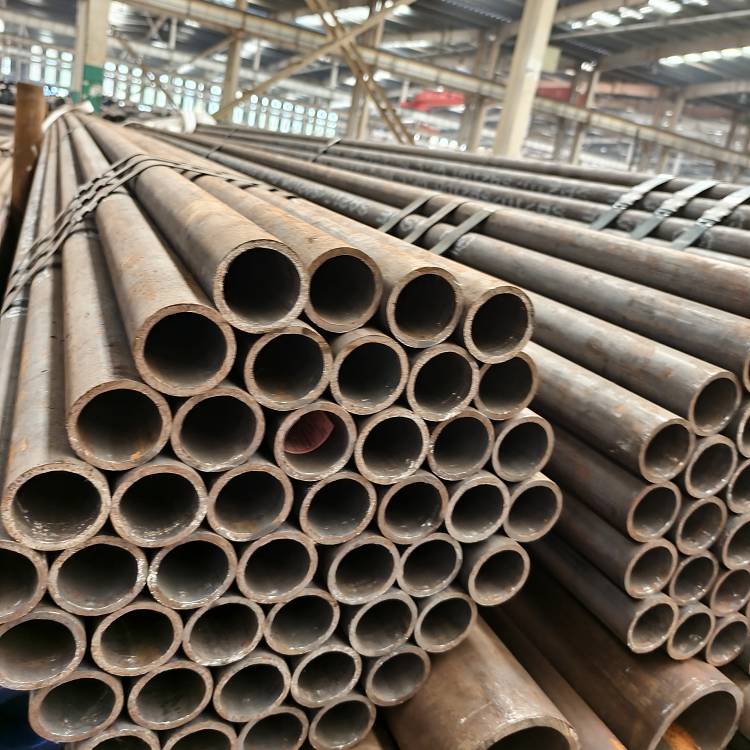
Why Choose Baogang Ganglian (Tianjin) Steel Co., Ltd.?
As a trusted steel exporter, we provide: High-quality seamless & welded pipes Competitive pricing & bulk supply ISO-certified manufacturing Global logistics support
Contact us for I-beams, angle steel, channel steel, and custom steel solutions tailored to your project needs.
Conclusion
Seamless steel pipes offer superior strength and reliability for high-pressure applications, while welded pipes are cost-effective for general use. Proper selection, storage, and testing ensure optimal performance.
For premium steel products, partner with Baogang Ganglian (Tianjin) Steel Co., Ltd. – your trusted supplier in the global steel industry.


