

Detailed explanation of steel plate application fields
1、 Construction and Bridge Engineering
High rise buildings and super high-rise buildings
Q355GJB High rise Construction Steel: Designed specifically for steel structures in high-rise buildings, with a yield strength of 355MPa and a tensile strength of 355-490MPa, it has high bearing capacity and seismic resistance. It is commonly used in main beams, columns, and core tube structures, which can significantly reduce the weight of buildings and lower the requirement for steel thickness.
Q355ND/Q355NE low-alloy steel: used for bridge main beams, bridge decks, and super high-rise building frames, with outstanding wind resistance and seismic performance, suitable for large-span bridges (such as river crossing bridges) and complex building structures.
Q235B carbon steel: As a basic building material, it is used for non load bearing or secondary load bearing parts such as exterior walls, roofs, and floors of buildings, with low cost and easy welding processing.
bridge and tunnel engineering
Q355 series steel plates, such as Q355ND and Q355NE, are used for bridge main beams, piers, and tunnel support structures. They have excellent fatigue resistance and are suitable for dynamic loads and complex environments.
Q235B steel plate: used for small bridges, guardrails, and temporary support structures, extending its service life through welding and anti-corrosion treatment.
2、 Mechanical Manufacturing and Engineering Equipment
construction machinery
Q355ND/Q355NE steel plate: used for the frame, boom, and hydraulic support of heavy equipment such as excavators, bulldozers, and cranes. Its high strength and wear resistance ensure the stability of the equipment in harsh environments such as mines and construction sites.
Q235B steel plate: used for manufacturing non core load-bearing components such as mechanical shells and chassis, with good processing performance and controllable cost.
Mining and Energy Equipment
Q355 series steel plate: used as a key load-bearing component for mining trucks, drilling rigs, and conveying machinery, with outstanding impact and compression resistance.
High strength wear-resistant steel plate: such as special alloy steel, used for wear prone parts such as crusher liners and excavator buckets to extend equipment life.
3、 Transportation and Shipbuilding
Automobiles and Rail Transit
Q355 series steel plate: used for automotive chassis, frames, and high-speed rail car structures, with lightweight design that balances safety and yield strength that meets dynamic load requirements.
Q235B steel plate: used for manufacturing truck bodies, train carriage panels, etc., and achieving mass production through stamping and welding processes.
Naval Architecture and Marine Engineering
Q355NE steel plate: Excellent low-temperature impact toughness (-40 ℃), used for the hull, deck, and offshore platform structures of polar ships, suitable for high salt spray corrosion environments.
Q235B steel plate: used for cabins and non load bearing partitions of inland ships, requiring galvanizing or painting anti-corrosion treatment.
4、 Energy and Chemical Industry
Petrochemical Equipment
Q355ND steel plate: used for the manufacturing of storage tanks, reactors, and pipelines, with corrosion resistance that meets the requirements of acidic medium environments.
Low temperature pressure vessel steel: such as Q355NE, suitable for the -40 ℃ low temperature condition of liquefied natural gas (LNG) storage tanks.
Electricity and New Energy
Q355GJB high construction steel: used for wind turbine tower and support structures, with high strength and wind load resistance to ensure equipment stability.
High temperature resistant alloy steel: used for thermal power boiler pipelines and nuclear power equipment components, with outstanding resistance to creep and high temperature oxidation.
5、 Special Performance and Emerging Fields
Low temperature environment engineering
Q355D/Q355E steel plate: suitable for low temperature impact scenarios of -20 ℃ and -40 ℃ respectively, such as polar scientific research stations and freezer steel structures, ensuring the toughness of materials under extreme temperatures.
Precision Manufacturing and Tools
Alloy tool steel: used in the manufacturing of molds, cutting tools, and measuring tools, to enhance hardness and wear resistance through quenching and tempering processes.
High precision steel plate: such as cold-rolled sheet, used for electronic product casings and precision instrument components, with high requirements for surface smoothness and flatness.
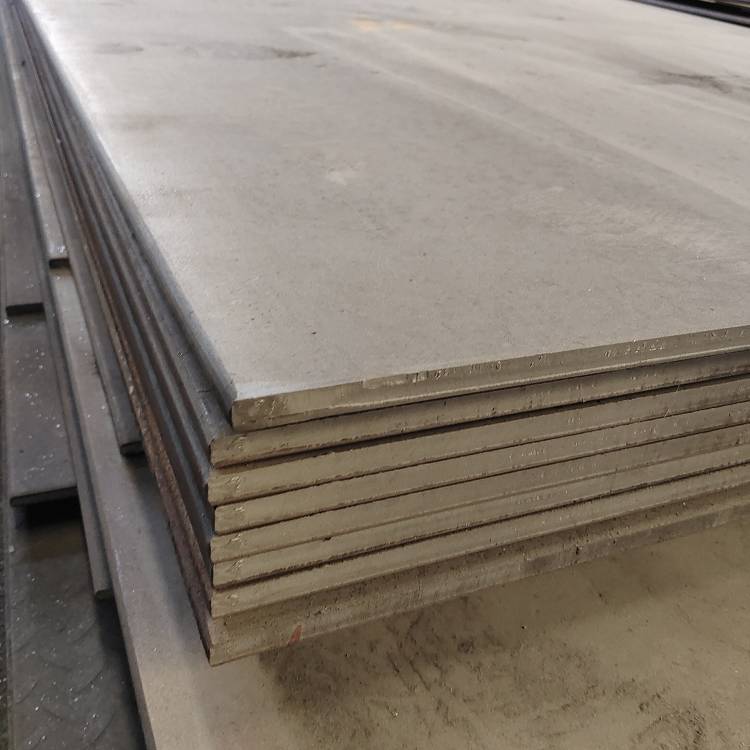
6、 General Manufacturing and Infrastructure
General structural components
Q235B steel plate: widely used in civil products such as door and window frames, billboards, shelves, etc., with flexible processing and high cost-effectiveness.
Q355 series steel plate: used for heavy-duty shelves and industrial platforms, with a load-bearing capacity of up to tens of tons.
Agriculture and Light Industry
Galvanized steel plate: used for agricultural machinery shells and grain silo structures, with rust resistance suitable for humid environments.
Color coated steel plate: used for home appliance shells and decorative panels, with both aesthetics and weather resistance.
summarize
The application fields of steel plates cover the entire industry chain from traditional construction to cutting-edge technology. **Low alloy high-strength steel (such as Q355 series) * * dominates heavy engineering and special environments due to its high load-bearing capacity, corrosion resistance, and low-temperature performance; **Carbon structural steel (such as Q235B) has become the basic material for general manufacturing due to its cost advantage and ease of processing; Special alloy steel is irreplaceable in high-end fields such as energy, chemical, and precision tools. In the future, with the breakthrough of new material technology, steel plates will further develop towards lightweight, functional, and environmentally friendly directions.


