

First, the explosion of infrastructure investment: the rigid demand for transportation and urbanization
High-speed rail and rail transit. The Yavan high-speed rail (built in China) uses a total of more than 500,000 tons of Q355D I-beams. Indonesia plans to build the Surabaya-Malang line later, and needs I-beams to support the design of column-free station buildings. Among the invited tenders of Vietnam's North-South High-Speed Rail (opened to traffic in 2032), China's I-beams have become the first choice due to Z35 tear resistance (laminar tear rate ≤ 15%). 2. Urban agglomeration development. Thailand ** Eastern Economic Corridor (EEC) ** requires I-beams to build high-rise steel structure buildings. China's I-beams have a significant cost advantage by reducing the weight by 20% with TMCP process (grain size ASTM 8). The New Clark City project in Manila, Philippines purchased weathering I-beams (09CuPCrNi), which can withstand salt spray for 15 years and adapt to the tropical marine climate.
Second, energy transformation: new energy infrastructure drives special steel
Photovoltaic support system. Vietnam plans to install 16GW of photovoltaic capacity in 2025. Lightweight I-beams (such as Baotou Steel Steel-linked H-beams 200 × 200mm) are matched with galvanized channel steel, and the installation efficiency is increased by 30%. The price of Q235B I-beams (zinc layer 80g/m2) exported from China is only 3700 yuan/ton, which is 15% lower than that of Japan and South Korea.
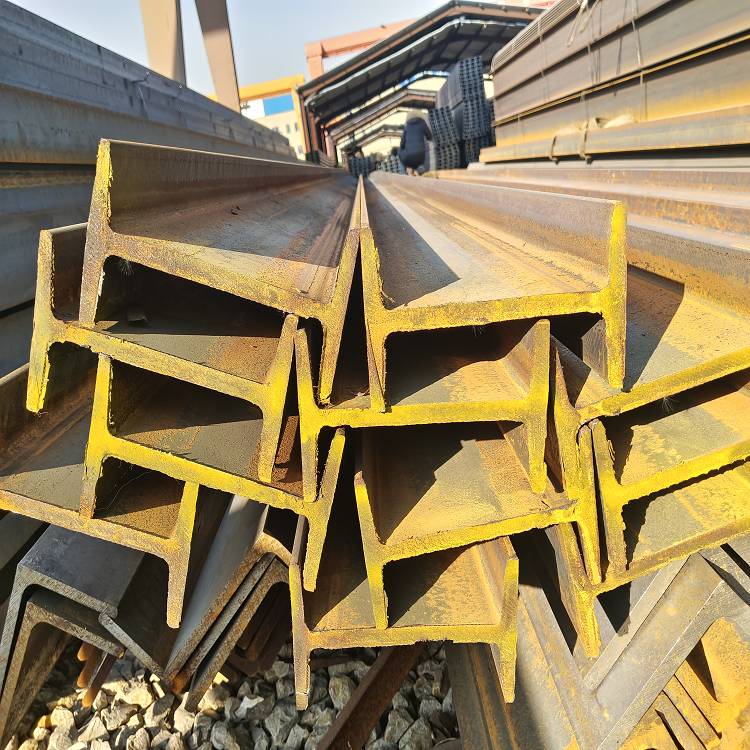
2. LNG receiving station and power grid. The Pengalan LNG project in Malaysia adopts China's L360NE low-temperature I-beams (-46 ° C impact energy ≥ 60J), and the matching seamless steel pipes are used for high-pressure pipelines. In the upgrade of Myanmar's national power grid, China's hot-rolled I-beams (tolerance ± 0.05mm) account for 60% of the steel used in iron towers.
III. Industrial Chain Reconstruction: China's Technical Standards and Supply Chain Advantages
Cost and delivery efficiency The average price of China I-beam to South East Asia CIF is 480-520 US dollars/ton, which is 25% lower than that of European Union products, and the shipping time is only 7-10 days (30 days in Europe). Baotou Steel Union set up a bonded warehouse in Indonesia to achieve 48 hours of direct access to the construction site for I-beam and angle steel. 2. Technical suitability The humid and hot climate of South East Asia requires steel to be corrosion-resistant. The epoxy resin coated I-beam (resistant to C5-M environment) developed in China has passed ISO 12944 certification, and the service life is 3 times longer than that of ordinary products. The carbon footprint of zero-carbon electric arc furnace I-beam (such as Hesang products) is 1.8tCO ²/t, which meets the European Union's carbon tariff (CBAM) re-export requirements. 3. Policy synergy effect. RCEP tariff preference: China's I-beam export tariff to Vietnam has been reduced from 8% to 0, stimulating the export volume to increase by 40% in the first quarter of 2025. Belt and Road Initiative financing support: The AIIB provides loans for the second phase of the China-Laos Railway to force the purchase of Chinese I-beam, seamless steel pipe and other steel.
IV. Challenges and future trends
Trade Barriers: Vietnam intends to impose a 10% safeguard tariff on Chinese I-beams, forcing enterprises to localize production (such as Angang's plan to build a factory in Vietnam). • Technology Upgrade: Intelligent I-beams (embedded stress sensors) will become the focus of competition in the next stage. China has piloted the application of Singapore's smart port project. Summary: The essence of South East Asia's I-beams demand is the triangular resonance of "infrastructure dividend + China's supply chain efficiency + low-carbon technology". It is expected that the annual compound growth rate of this market will remain at 15-20% from 2026 to 2030. Chinese enterprises need to seize the zero-carbon certification and intelligent delivery window to consolidate their advantages.
Global Collaboration and Future Layout: Westward Transmission of Green Hydrogen and Intelligent Traceability
Simultaneously promote the blockchain traceability system to realize the whole life cycle carbon footprint tracking of seamless steel pipes and I-beams, and link with the Zhejiang virtual power plant platform to optimize green power dispatching. In the next five years, China's steel industry may implement carbon neutrality closed-loop through CCI technology. Baotou Steel Union will use the "rare earth steel + high-end profiles" strategy to reduce carbon emission intensity by 95% in 2060 compared with 2020.
Behind the surge in demand for I-beams in Southeast Asian markets (a year-on-year increase of 34% in 2025) is the multiple driving forces of infrastructure expansion
energy transformation, and regional industrial chain reconstruction. The following analyzes the core reasons from three dimensions: policy, industry, and technology.


